
Category: Politics & Governance
Date: November 13, 2026
Location: Parliament House, Accra, Ghana
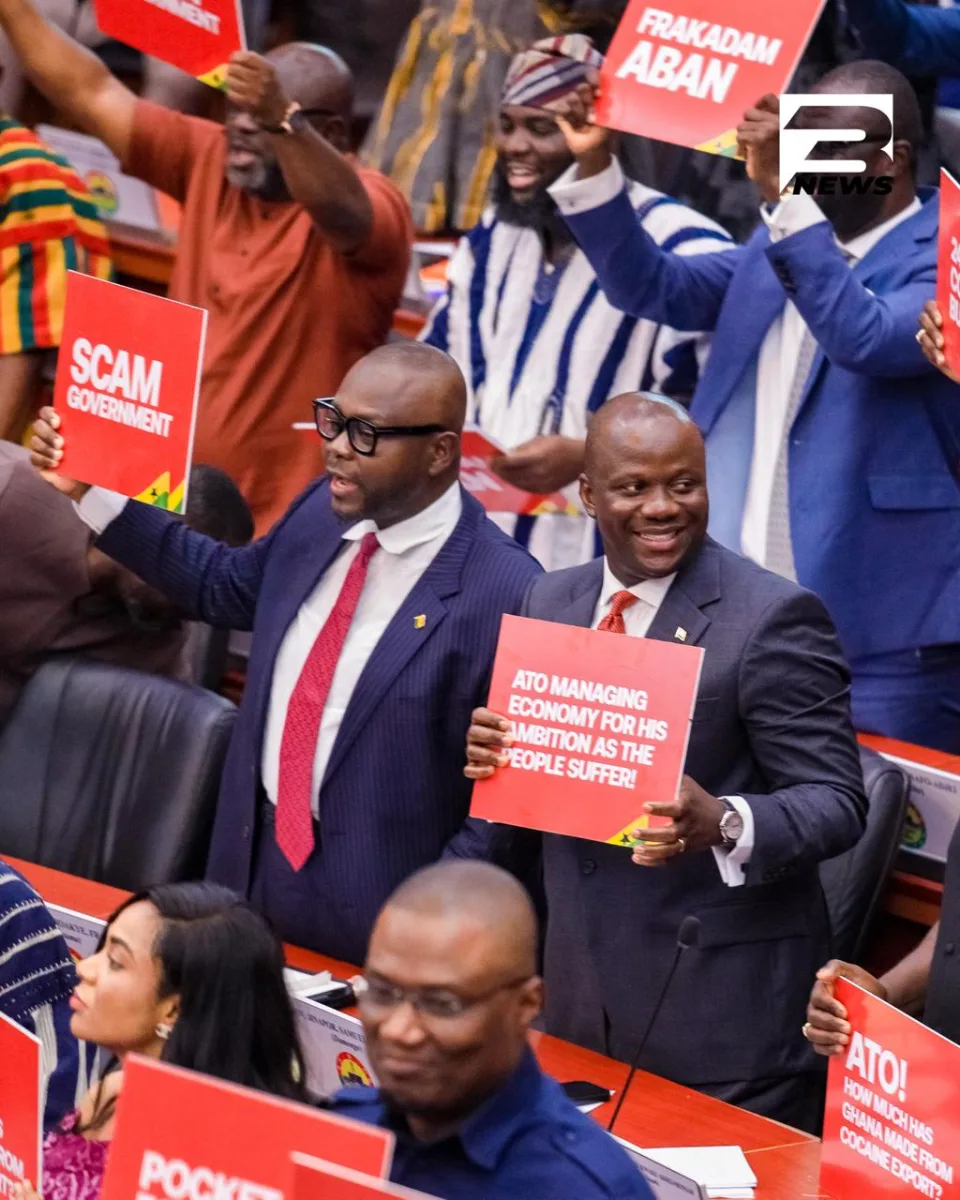
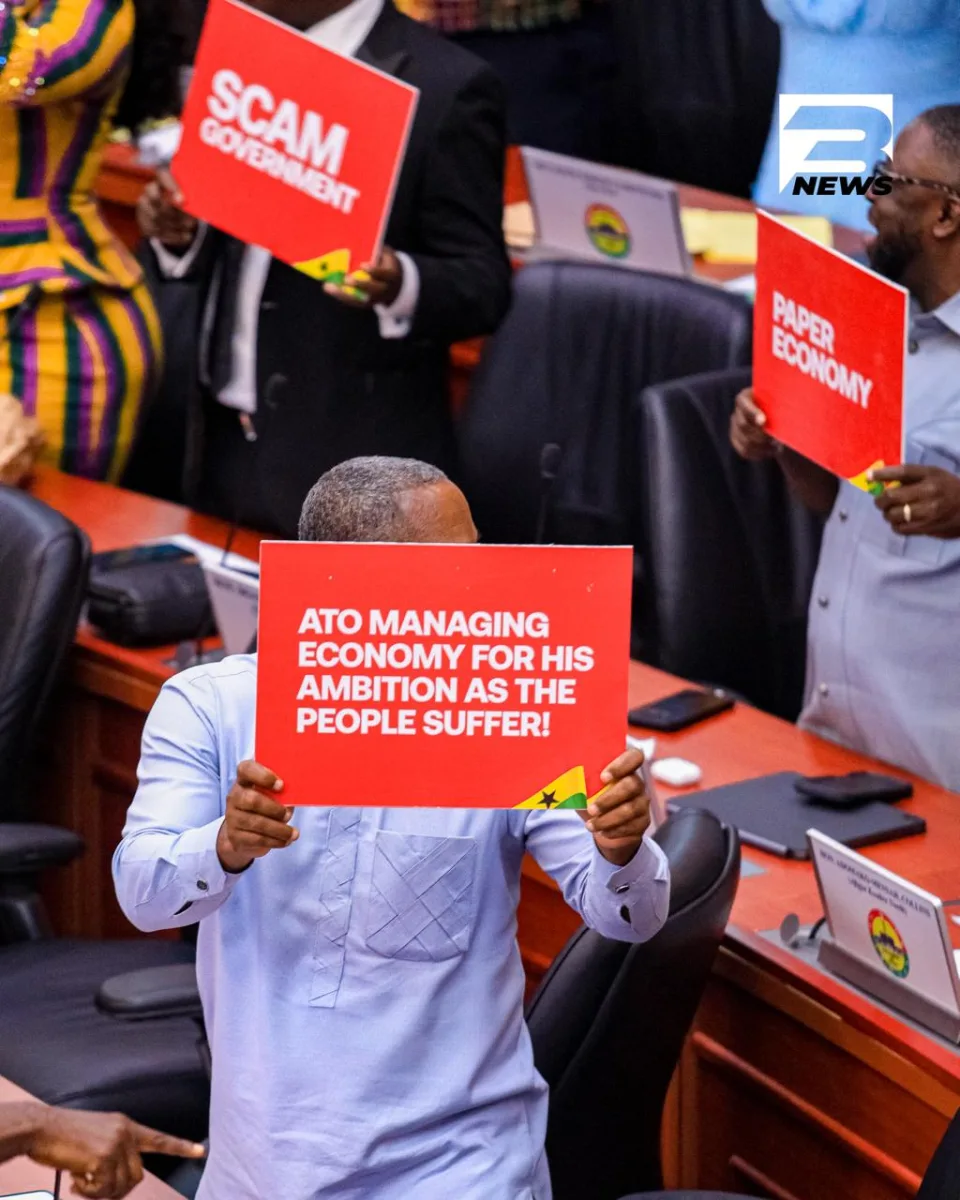
Minority Members of Parliament staged a protest during the presentation of Ghana's 2027 Budget Statement and Economic Policy, displaying placards to express their dissatisfaction with the government's economic policies.
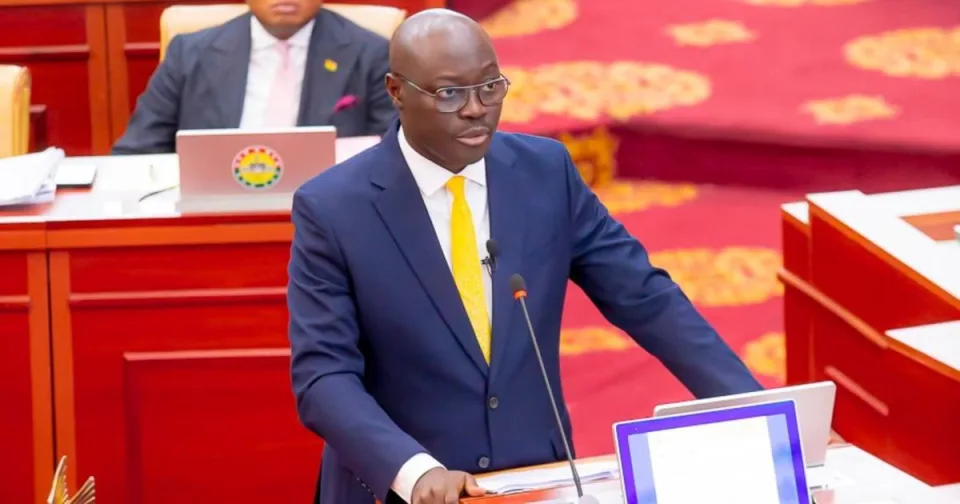
The protest took place on Thursday, November 12, 2026, as Finance Minister Dr Cassiel Ato Forson presented the budget to Parliament.
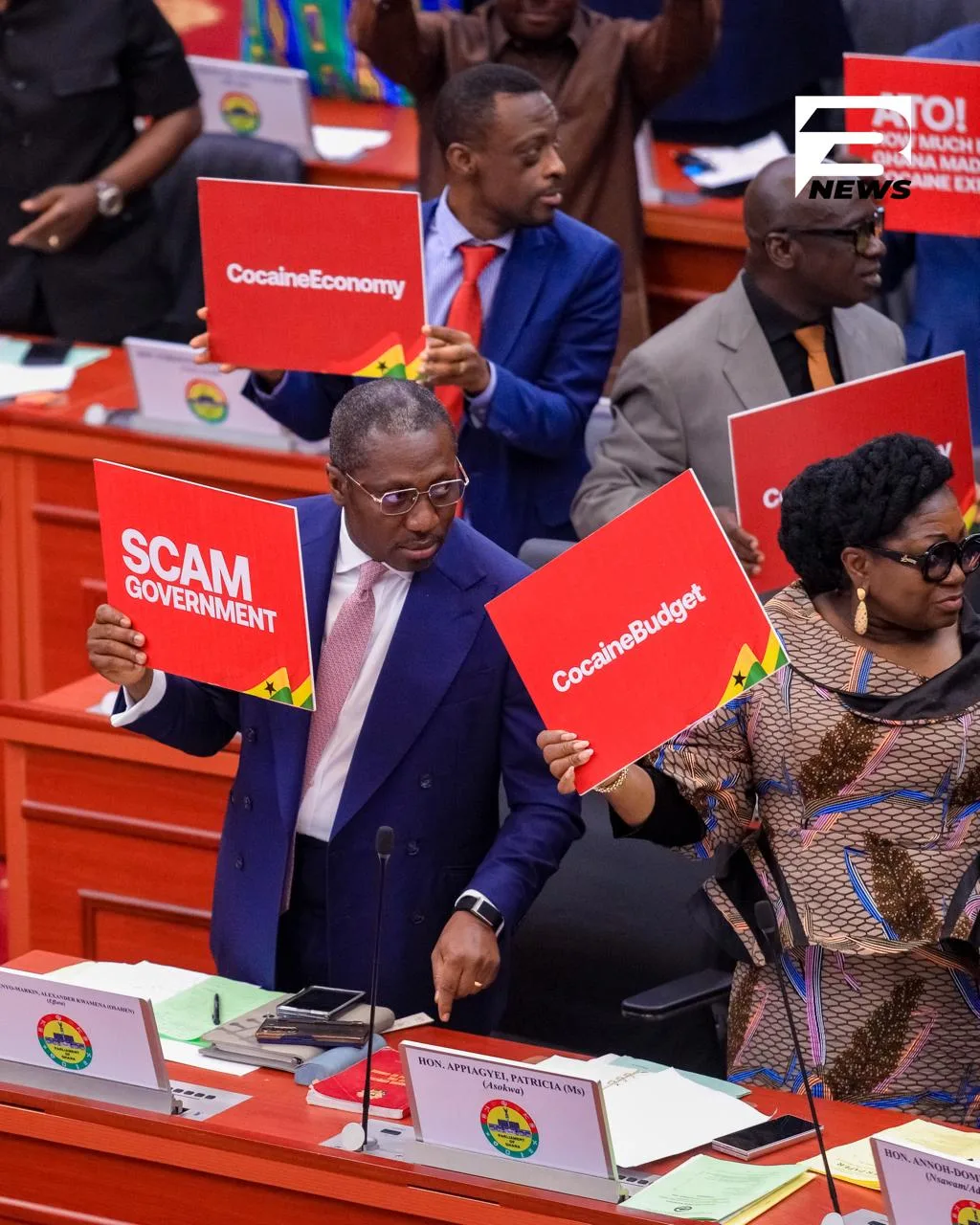
Several opposition MPs held up red placards bearing inscriptions such as “Scam Government,” “Cocaine Budget” and “Paper Economy.”
The demonstration highlighted the growing political disagreement between the government and the Minority over the country's economic direction.
Minority MPs Challenge Government's Economic Claims
The Minority accused the government of presenting economic figures that, in its view, do not reflect the financial difficulties facing ordinary Ghanaians.
Speaking after the budget presentation, Minority Leader Alexander Afenyo-Markin described the government's economic programme as a “paper economy.”
He argued that improvements in economic indicators would mean little to households if food prices, unemployment and business operating costs remained major concerns.
The Minority also questioned whether the government's policies would create sufficient employment opportunities and provide meaningful support for farmers and businesses.
Why the “Cocaine Budget” Placards?
Some Minority MPs displayed placards referencing cocaine trafficking and chanted slogans about a “cocaine economy” following the budget presentation.
Their protest came amid public discussions about recent international cocaine seizures linked to consignments originating from Ghana.
One case involved approximately 2.6 tonnes of cocaine discovered by Spanish authorities at the Port of Valencia.
The Minority used the incident to question the government's response to drug trafficking and border security.
However, the political slogans are accusations made by opposition MPs and do not establish government involvement in drug trafficking.
Government Unveils US$10 Billion New Economy Programme
Despite the protest, the Finance Minister outlined several economic proposals intended to strengthen production, exports and employment.
A major feature of the budget is the government's proposed US$10 billion New Economy Programme, covering the period from 2027 to 2030.
The programme targets commercial agriculture, energy infrastructure, technology, textiles, pharmaceuticals and mineral processing, among other sectors.
The government also projects economic growth of 5.2% in 2027 and has announced plans to repay certain restructured debts ahead of schedule.
Dr Ato Forson stated that the budget would introduce no new taxes.
The government maintains that the programme is designed to promote sustainable economic growth and create opportunities for Ghanaian businesses.
Afenyo-Markin Questions Jobs and Cost of Living
At a press conference after the presentation, Minority Leader Alexander Afenyo-Markin challenged the government's economic projections.
He argued that the cost of living remained a serious concern for households and questioned the government's record on employment creation.
The Minority also raised concerns about agricultural support, the proposed Women's Development Bank and the implementation of earlier government initiatives.
According to the Minority, the government must demonstrate how its budget commitments will translate into jobs, affordable food and improved living standards.
The opposition caucus indicated that it would undertake a detailed examination of the budget before presenting its full assessment.
Budget Debate Expected to Continue
The protest added to the political exchanges surrounding the 2027 Budget.
While the government has presented the New Economy Programme as a major investment in Ghana's economic future, the Minority maintains that the proposals must be judged by their impact on ordinary citizens.
Parliament is expected to scrutinise the budget's spending priorities, revenue projections and proposed programmes as the legislative process continues.
For Ghanaians, the central question remains whether the policies announced in the 2027 Budget will deliver measurable improvements in employment, household incomes and the cost of living.